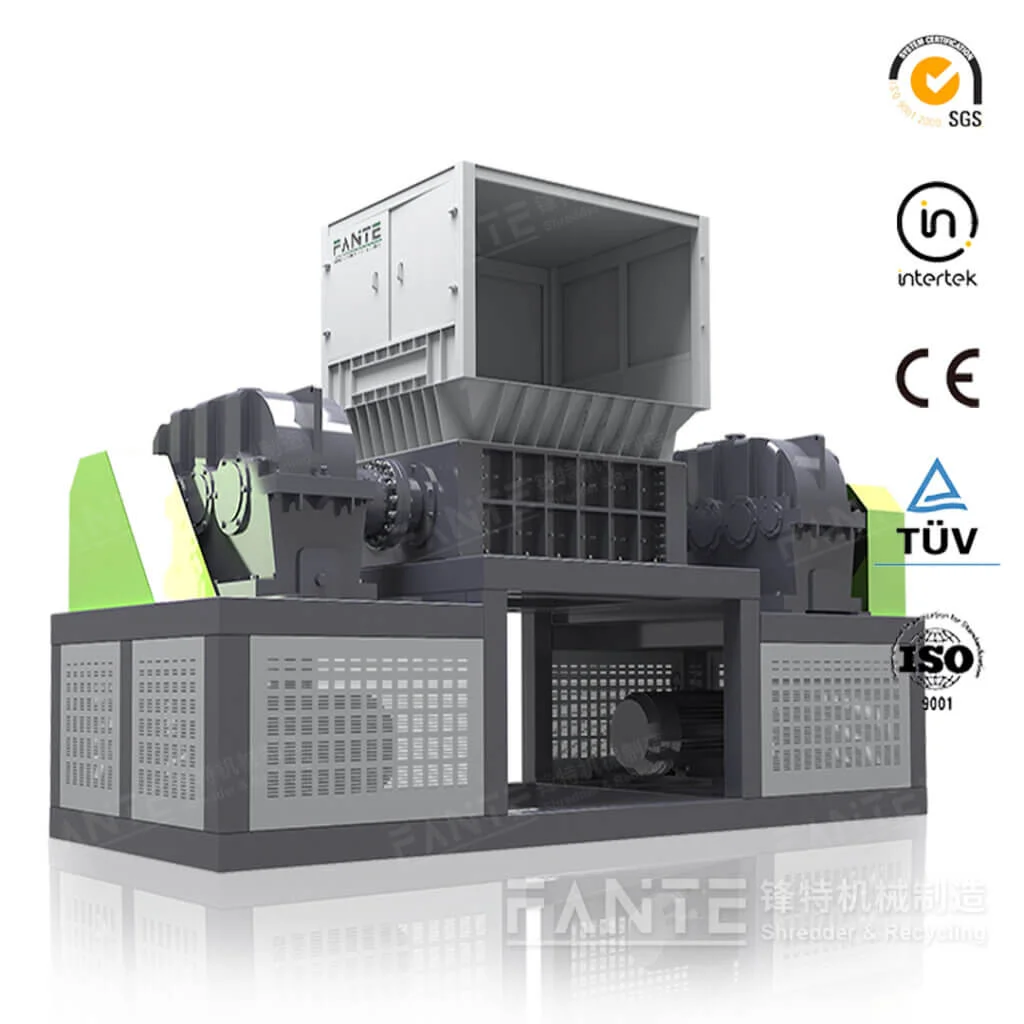
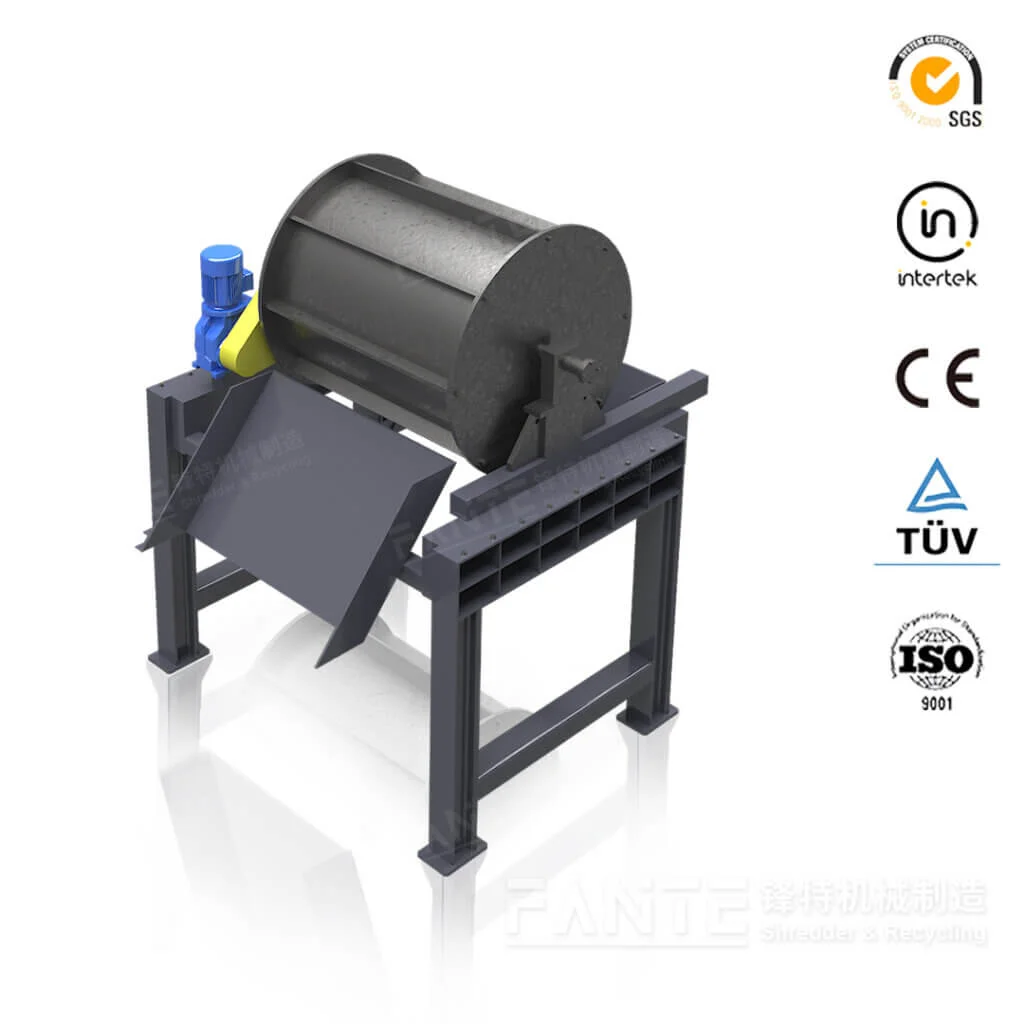
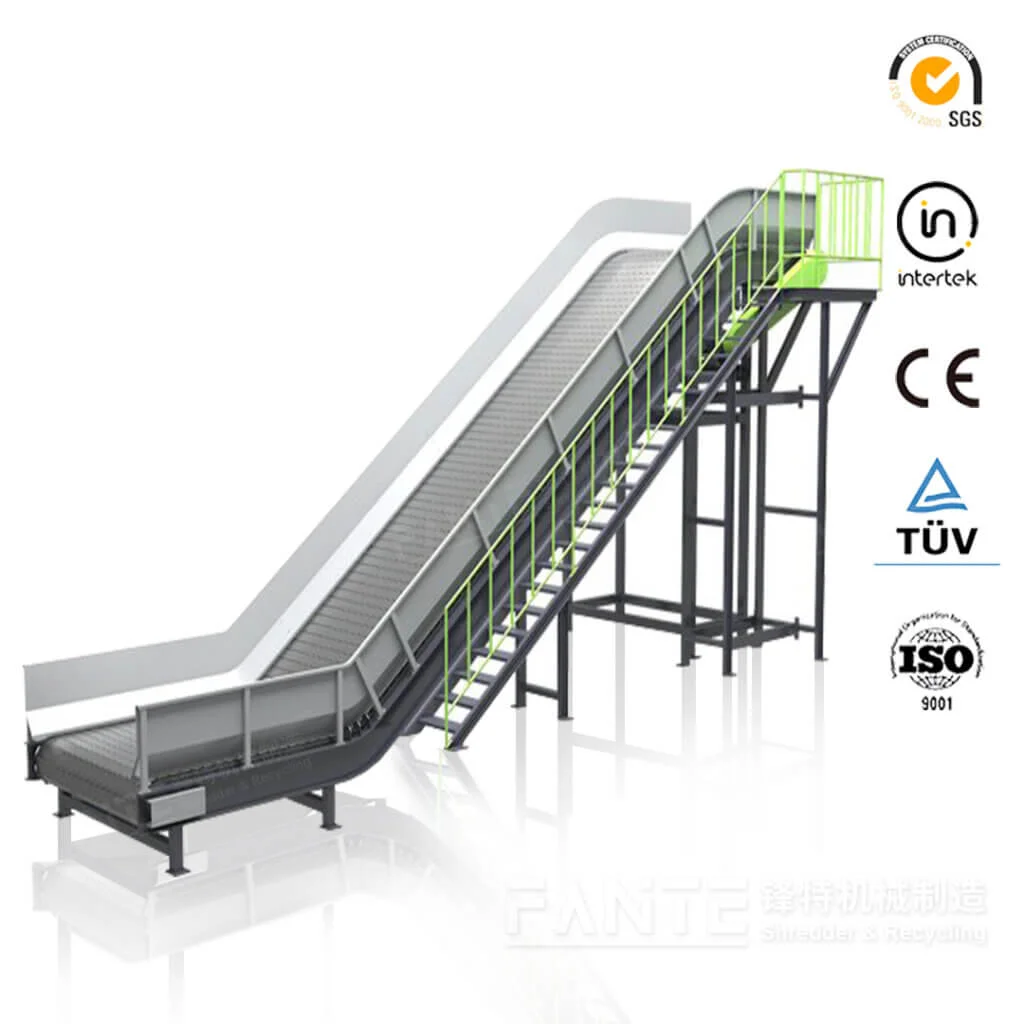
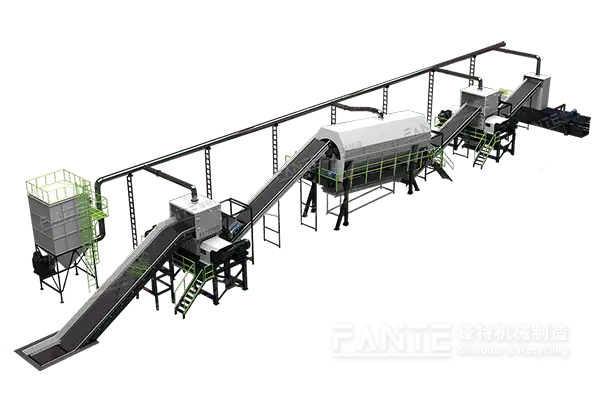
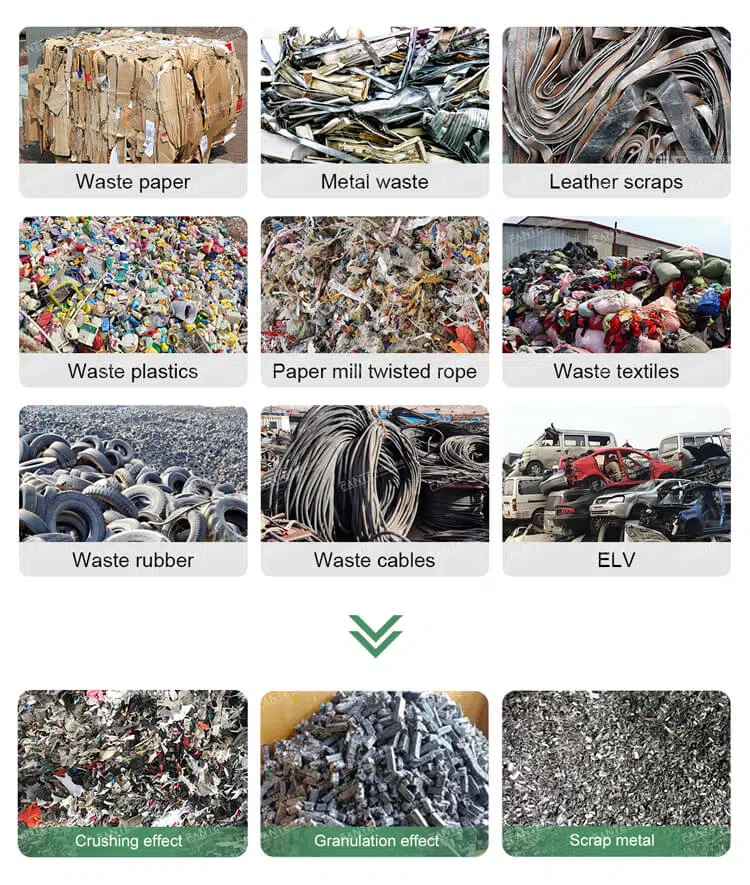

Fante Industrial Solid Waste (RDF/SRF) system converts industrial waste into high-calorific-value SRF or RDF, replacing traditional fossil fuels and providing businesses with a sustainable energy solution. Designed for processing high-calorific value solid waste such as waste leather and waste plastics, the system uses a high-torque double-shaft shredder and a dedicated single-shaft shredder for SRF/RDF to ensure efficient and accurate material processing. With this system, companies can not only reduce CO2 emissions and energy costs but also comply with environmental policies, enjoy policy support and maximize the use of resources.
A table of common RDF specifications is shown below:
| RDF Parameter | Particle size (mm) | Caloric value (kcal/kg) | Density (kg/m3) | Water content |
| Category I | 50-90 | >3000 | <250 | <20% |
| Category II | 20-50 | >4000 | <150 | <15% |
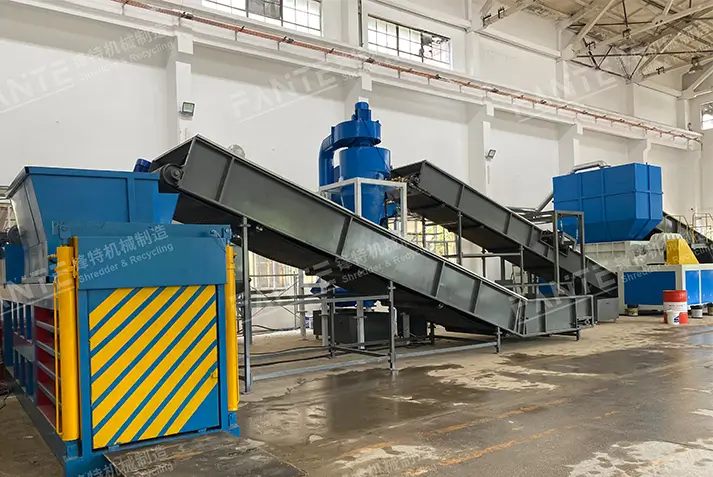
MAIN EQUIPMENTS
Why choose our RDF System?
- Equipped with a high-torque industrial shredder and an SRF/RDF-specialized single-shaft crusher, the system ensures efficient and precise processing.
- After secondary shredding, the material size can reach 30-80mm (customizable based on application requirements), with a compliance rate exceeding 95%.
Disposal of materials
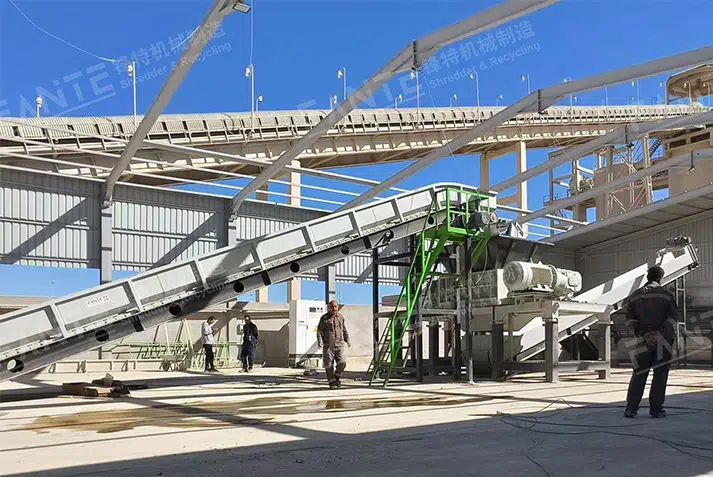
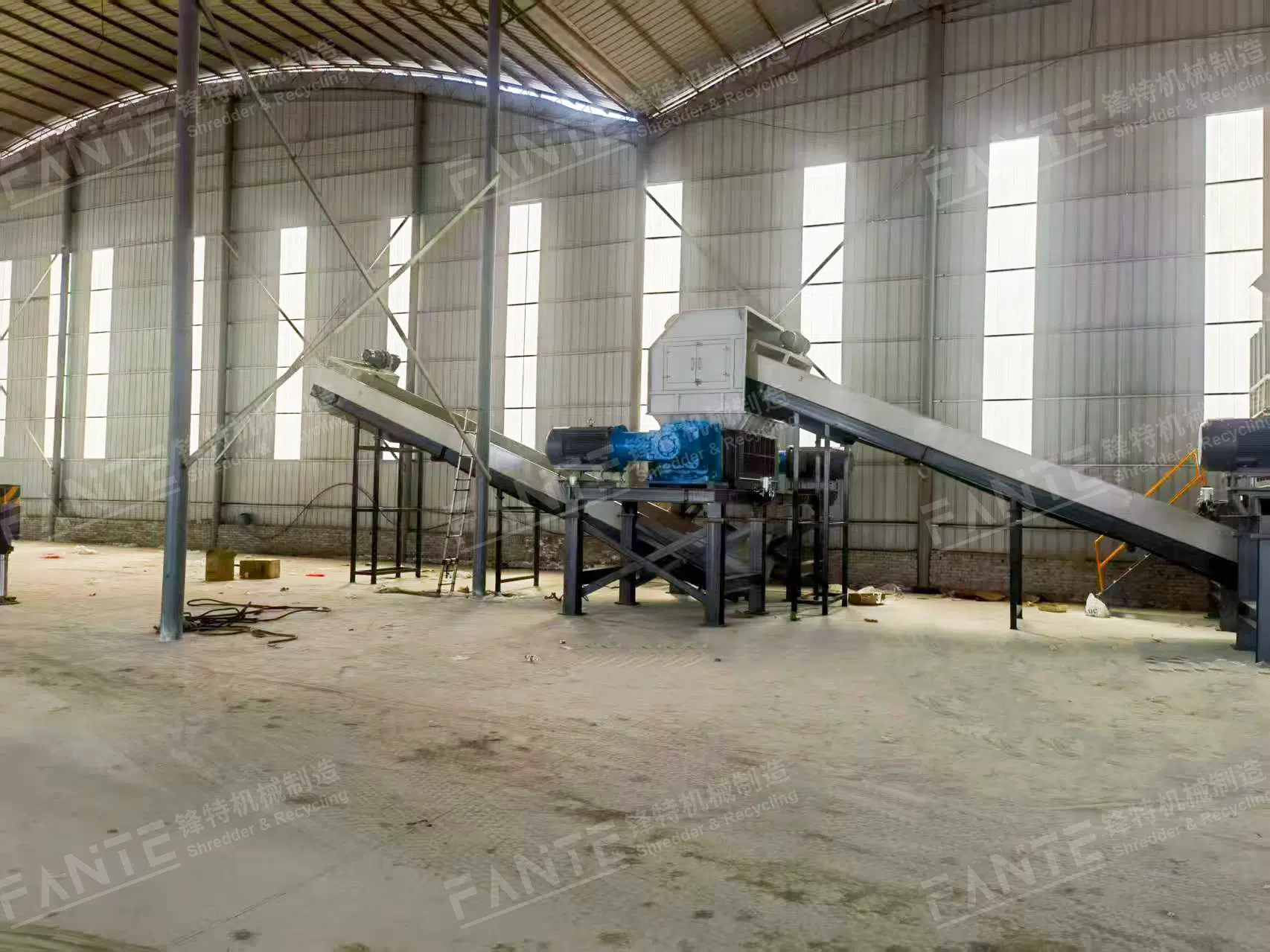
Successful Cases
Frequently Asked Questions
Can the RDF output size be adjusted?
Yes. The output size in an RDF production line can be controlled by adjusting shredder settings and screen sizes, depending on fuel specifications.
How do you improve RDF quality in a recycling system?
To improve RDF quality, an industrial solid waste recycling system can add magnetic separation, air classification, and fine screening to remove metals and impurities.
Do you provide technical support after purchasing the RDF recycling system?
Yes. We provide ongoing technical support and remote assistance to ensure the stable operation of the RDF recycling system.
Can you help optimize the RDF recycling system based on our project needs?
Yes. We can customize and optimize the RDF recycling system based on your material type, capacity, and fuel requirements.